



Gone are the days when investment custodians were always in the background as other financial services providers take centre stage.
The rise of tokenised and digital assets, increasing emphasis on global portfolios, tighter regulatory scrutiny, and the need for digital transformation in the world of AI have made investment custodians more critical to global finance.
One implication of this is that institutional investors can no longer judge an investment custodian by its ability to safeguard assets and settle trades. Risk management, compliance, technology integration, and operational efficiency are also important in choosing the right custodian.
Such a comprehensive approach to evaluating and choosing custodians will help institutional investors identify partners who can help them thrive amid the global restructuring redefining global finance.
In what follows, we consider what this comprehensive evaluation will look like. We’ll cover:
- What trends are redefining the investment custodian landscape?
- What factors should you consider when choosing an investment custodian?
- Where can institutional investors find the right custodian?
Do you want to learn more about the global trends that are shaping institutional investors’ choices? Subscribe today to the cio investment club’s newsletter for fresh insights on the global economy.
1. What trends are redefining the investment custodian landscape?
The growing popularity of digital assets, global portfolios, digital transformation and integrated platforms, regulatory shifts, and operational strain from geopolitical disruptions are some of the trends redefining the nature and importance of investment custodians.
The growing popularity of digital assets
Many would have considered real-world assets (RWA) tokenisation another fad, if not for the fact that traditional financial institutions have been at the forefront of its adoption.
In recent years, we have seen top players in global finance like J.P. Morgan, BlackRock, VanEck, and Franklin Templeton tokenising US Treasury bills, US Treasury bonds, stablecoins, mortgage-backed securities, and money market funds, among others.
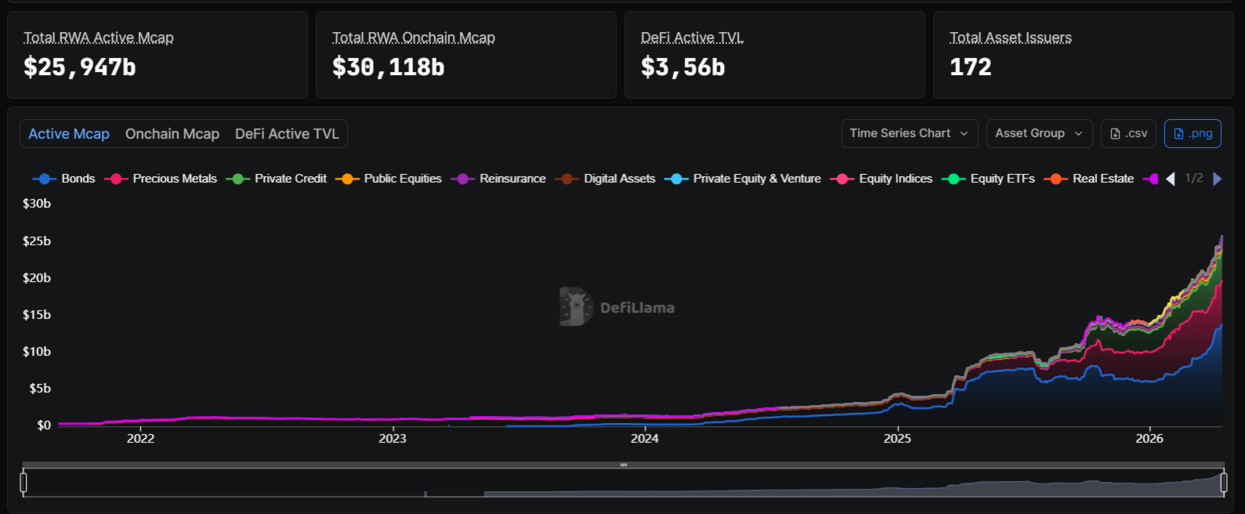
The market cap of RWAs is now over $25 billion, with 172 issuers, according to DefiLlama, a DeFi analytics platform, as seen below:
Tokenised RWA Market Size
Source: DefiLlama
In addition to tokenised RWA, institutional investors are also embracing stablecoins for cross-border payments, the purchase of other cryptoassets, and participation on decentralised platforms.
Also, the adoption of cryptocurrencies by institutional investors continues to grow. Since the Securities and Exchange Commission approved spot bitcoin ETFs in the US, crypto ETFs have become more popular.
There are now 102 crypto exchange-traded funds/notes/products with a market cap of $126.66 billion, according to Companies Market Cap, a platform that monitors listed assets across the globe.
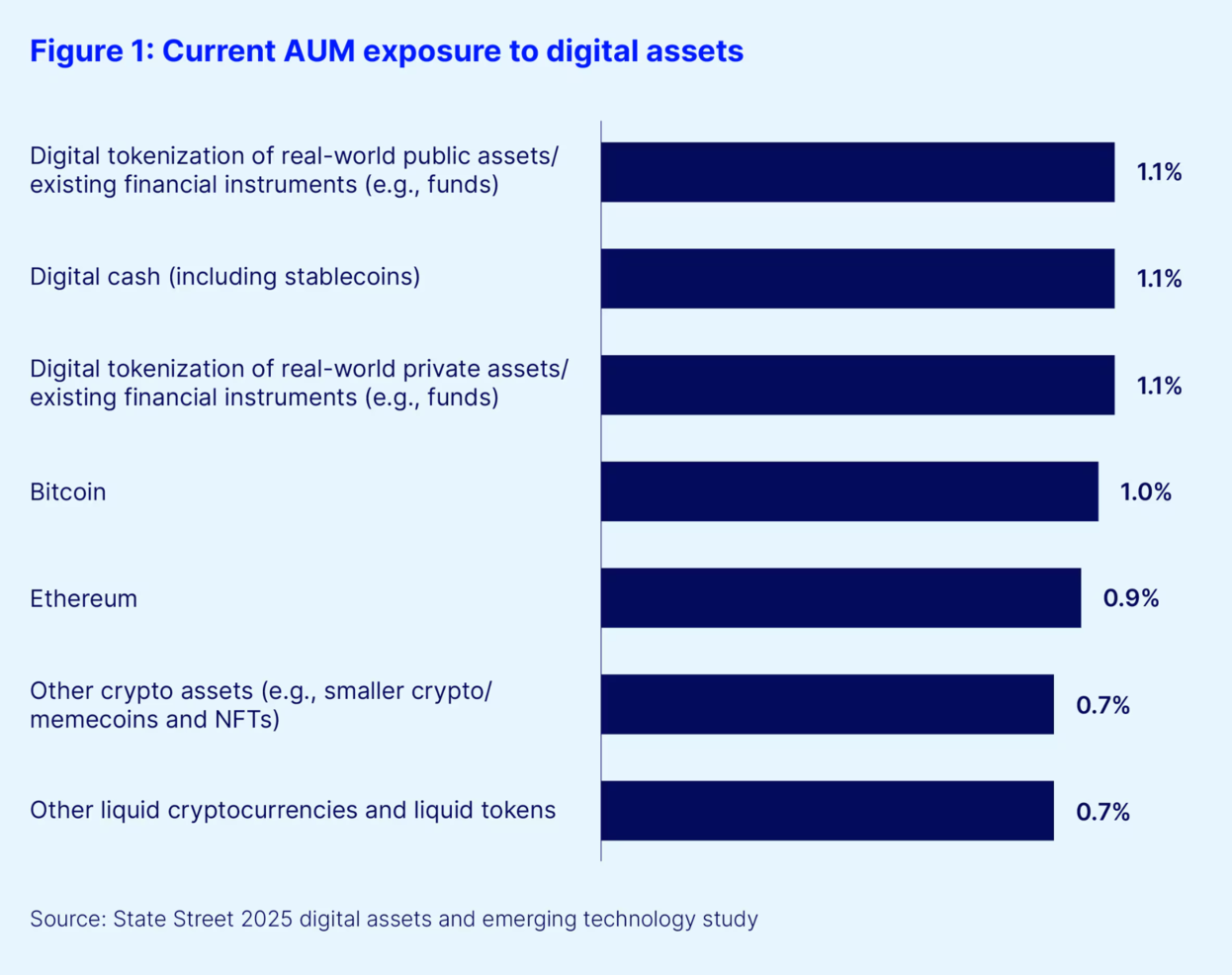
In 2025, digital assets were 7% of the portfolios of institutional investors, according to a survey by State Street, a global financial services firm.
Exposure of Institutional Investors to Digital Assets
Source: State Street
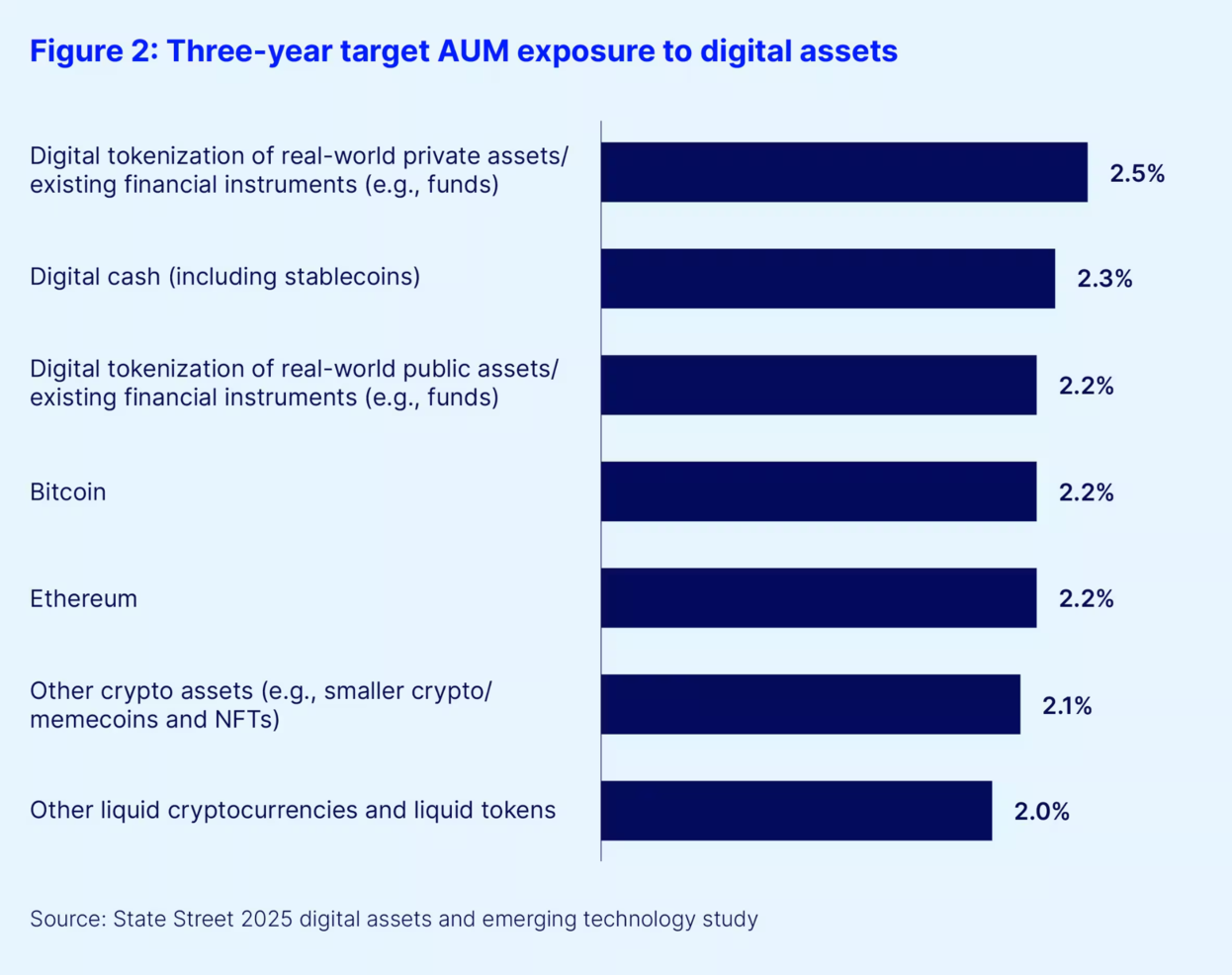
More interesting is their projection that this figure will rise to 16% between 2025 and 2028.
Projected Exposure of Institutional Investors to Digital Assets
Source: State Street
How does this growing adoption of digital assets affect custodians?
It means custodians must structure their operations such that they can handle the safekeeping and settlement of digital assets just as they do with non-digital assets.
“Modern custody operations must handle equities, fixed income, alternatives, and digital assets within a single operational view, while ensuring compliance with local market rules,” according to FinTech Global, a fintech news and education platform.
Digital assets introduce new risks that require certain risk and control frameworks from investment custodians willing to extend their services to this asset class.
“As digital assets such as cryptocurrencies, stablecoins, and tokenised instruments introduce new risks, custodians must develop appropriate capabilities and operating models within robust risk and control frameworks,” according to Abraham George, Head of Custody at Absa Mauritius.
Global portfolios and diverse structures
International/global diversification is one of the best investment strategies for 2026, especially for institutional investors.
On the one hand, investors want to diversify away from the uncertainty that has rocked the US due to Trump’s tariffs, monetary policy uncertainty, the national debt crisis, and now, the war in Iran.
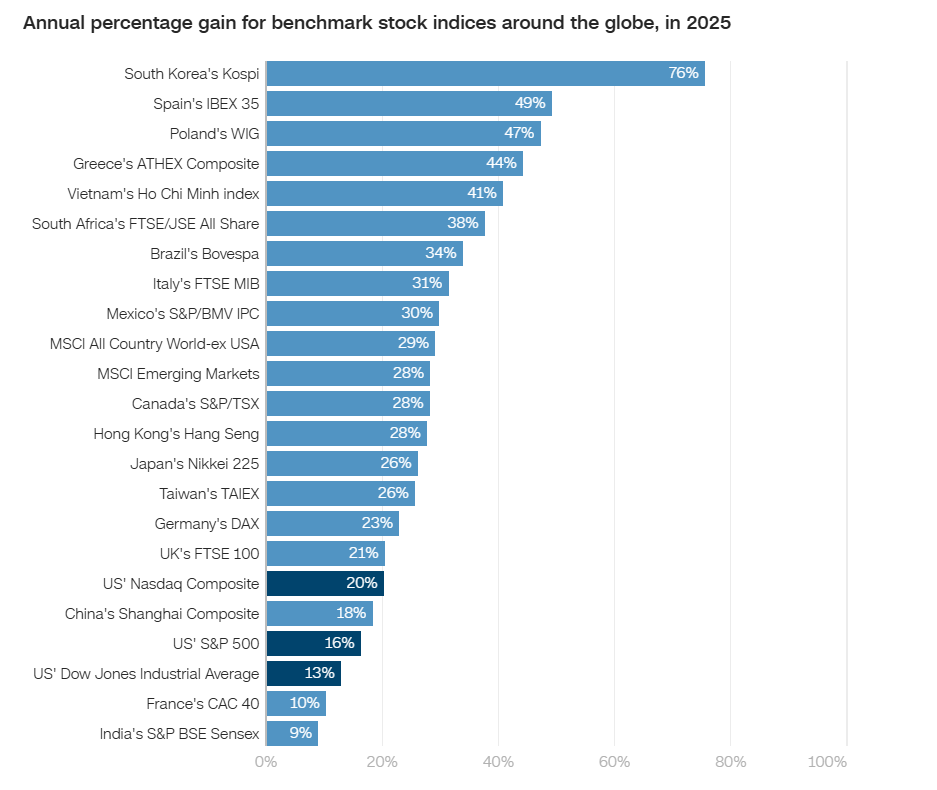
On the other hand, global equities’ performance in 2025 is opening the eyes of investors to the potential outside of the US. For example, many stock indices outperformed the S&P 500 in 2025:
2025 Performance of Various Equity Indices
Source: CNN
With institutional investors increasingly embracing global portfolios, custodians have to deal with the complexity that comes from cross-border compliance.
“At the same time, the rise of multi-asset and cross-border custody models is redefining operational complexity,” according to FinTech Global. “Institutional portfolios are expanding across asset classes, currencies, and geographies, forcing custodians to support increasingly diverse structures.”
Regulatory shifts
Many analysts have argued that regulatory shifts are responsible for the transformation of custody from a background activity to something that is now front and centre.
“Custody is often considered an invisible function as it operates entirely in the background while enabling fund managers to trade, brokers to execute and settle trades, and regulators to enforce asset protection,” said George. “However, regulatory shifts are pushing custody into the spotlight, and custodians are now seen as critical market infrastructure.”
These regulatory shifts include enhanced custody rules by the SEC that cover digital asset custodians and enforce stricter segregation of client assets in the US.
Markets in Crypto-Assets Regulation (MiCA) has sought to harmonise standards for digital assets custody in the European Union.
The Financial Conduct Authority (FCA) in the UK has also tightened oversight of custodians with updates to its Client Asset Sourcebook (CAS).
One consequence of this is that trust is now a premium. “Clients may worry whether their custodian can continually upgrade its systems and processes, strengthen its risk and control environment, and adapt to regulatory changes,” noted George.
Operational strain and the need for operational efficiency
The three factors above mean that investors have more expectations from custodians. Adjusting to these new expectations is putting an operational strain on them and reinforcing the need for operational efficiency.
“Custodians are no longer just holding assets; they are expected to provide real-time reporting, integration with multiple platforms, and support for alternative assets,” according to Deepak Shukla, the CEO of Pearl Lemon Accountants, a firm focused on investment strategy, alternative assets, and navigating evolving financial infrastructure.
“Safekeeping alone is no longer sufficient,” noted FinTech Global. “Institutional clients now expect real-time visibility, advanced analytics, and transparent reporting that supports their own risk and investment decisions.”
In other words, custodians are “being forced to evolve from passive record-keepers into much more active participants,” according to Guy McKanna, the editor of InvestorStrategy News, an online publication for institutional investors, managers, and service providers.
Market volatility is another source of operational strain, according to George.
“Recent geopolitical instability has triggered market volatility, resulting in higher transaction volumes, increased operational strain for custodians, and a higher risk of settlement failures, especially in markets with shorter settlement cycles.”
Digital transformation and integrated platforms
The pursuit of operational efficiency in response to clients’ expectations has led custodians on a journey of digital transformation.
For example, custodians have responded to clients’ demand for real-time data and actionable insights by adopting artificial intelligence (AI) in their operations.
“AI has the potential to enhance operational efficiency, improve risk oversight and support more informed decision-making,” according to Stavrou, Leon Stavrou, Head of Asset Servicing, Australia and New Zealand at Northern Trust, in an interview with McKanna, “but its value ultimately depends on strong data foundations and robust controls.”
Also, the need to maintain a consistent operational framework in an environment requiring compliance with multiple regulations across different jurisdictions has led to the consolidation of fragmented systems.
“Institutions are consolidating fragmented systems into single platforms that can handle settlements, reconciliation, and reporting within a consistent operational framework,” noted FinTech Global. “This consolidation reduces operational risk, improves transparency, and allows custodians to maintain tighter control across jurisdictions.”
2. What factors should you consider when choosing an investment custodian?
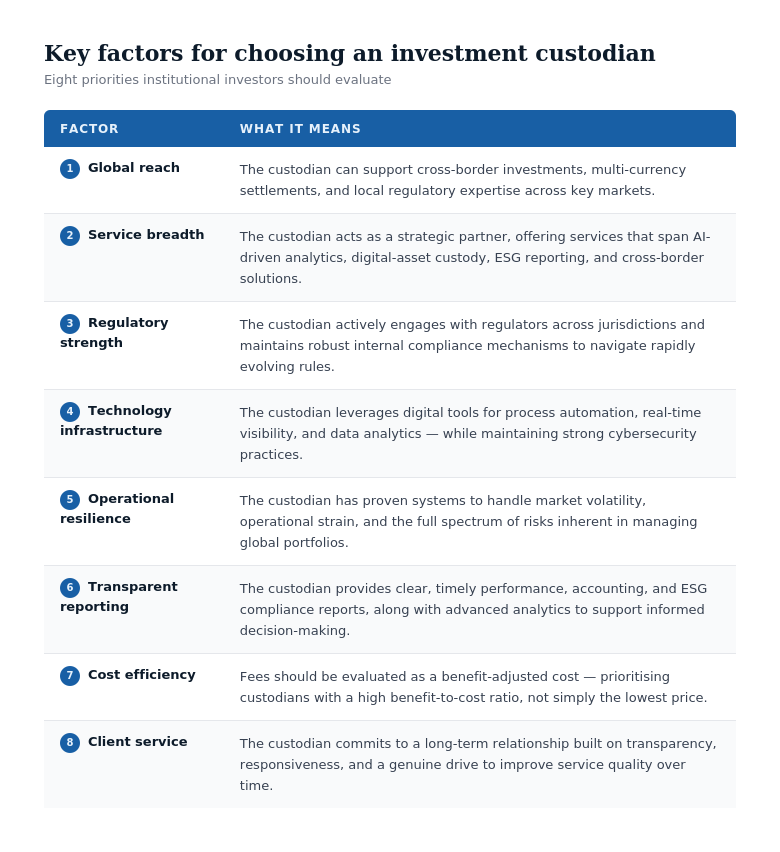
Given the trends we have noticed, global reach, service breadth, regulatory strength, technology infrastructure, operational resilience, transparent reporting, cost efficiency, and client service are the factors you should prioritise when choosing the right custodian.
We consider these factors in turn:
- Global reach: Institutional investors with a globally diverse portfolio need custodians with global coverage. A suitable custodian will have the capacity to support cross-border investments and multi-currency settlements.
This capacity will manifest in presence in key markets, local expertise in regulations across jurisdictions, regional settlement systems, and the ability to handle time-zone differences.
- Service breadth: Institutional investors should embrace custodians who are alive to the scope of their responsibilities in today’s world.
“Custodians are evolving from service providers to strategic partners with roles now encompassing AI, real-time data, cross-border solutions, and ESG reporting,” according to Daniel Cheever, Head of Securities Services Australia & New Zealand at BNP Paribas Securities Services, in an interview with McKanna.
Similarly, institutional investors should choose custodians who have evolved their infrastructure to include digital-asset custody. Apart from infrastructure, such custodians must have the appropriate licenses that enable them to hold private keys and manage blockchain-based assets.
“The days of picking one custodian for equities and another for alternatives are ending,” according to Tapos Kumar, the founder of Finance Ideas, a financial education blog. “The winner will be the custodian that can hold a pension fund’s public stock portfolio, its private credit tokens, and its Bitcoin ETF shares under one operational roof, with real‑time reporting.”
- Regulatory strength: We have seen how regulatory standards are changing in the US, the UK, and the EU. The same changes are happening in the Asia-Pacific.
Institutions should favour custodians who engage with regulators across jurisdictions and maintain robust internal compliance mechanisms.
“A custodian that can navigate a U.S. SEC examination while simultaneously complying with a new EU Digital Operational Resilience Act (DORA) requirement is worth a premium,” according to Kumar. “Therefore, the lowest‑fee custodian is the most expensive when a regulatory fine hits or when you can’t move assets across borders for weeks.”
- Technology infrastructure: To meet new requirements, custodians need to embrace digital tools that will support process automation, straight-through processing, real-time visibility, data analytics, and integrated operational frameworks.
In other words, you can’t be content to only look at the books of a custodian and evaluate its financial stability. You need to ask questions regarding how it is embracing technology to deliver better value.
As technology adoption increases, cybersecurity becomes increasingly crucial. Thus, you need to ask about the strategies it is adopting to secure clients’ data and money.
- Operational resilience: As we have seen, custodians are no longer in the background; they have become a crucial part of the global market infrastructure.
The right custodian must have systems in place to handle operational strain from both market volatility and clients’ expectations.
“In a volatile macro economy, the speed with which you can move collateral, post margin, or reallocate liquidity is a direct driver of returns,” said Kumar. “Equally, a slow or rigid custodian turns a strategic asset into a stranded asset.”
When choosing a custodian, evaluate how it performed in past financial market downturns and crises. This gives a partial outlook on its preparedness for subsequent ones.
Risk management is a crucial part of operational resilience. Consequently, when choosing the right custodian, you should assess its risk management strategies.
For custodians that support global portfolios, the key risk areas you should focus on include time zone differences, multiple clearing systems, varying settlement cycles, FX exposure, and other market-specific practices, according to George.
- Transparent reporting: Transparency is an essential differentiator in an industry where trust is crucial.
The best custodians provide transparent performance, accounting, and ESG compliance reports of clients’ assets.
Also, as we have seen, clients now demand advanced analytics that will help them make better use of the data.
- Cost efficiency: It’s important to state that fees should not be a primary factor when choosing the right custodian. It should only be a tie-breaker when two custodians provide similar value based on all other factors, and you need to choose one.
In other words, it’s the benefit-adjusted fee (to mimic the concept of risk-adjusted returns) that matters. Focus on custodians with a high benefit-to-cost ratio.
- Client service: As Cheever said, investment custodians are now considered strategic partners. You should seek a partner who is interested in a long-term relationship built on trust, responsiveness, and value creation.
Trust involves providing transparent reports and acting in your best interest. Responsiveness manifests in dedicated relationship managers and a willingness to quickly and accurately address your concerns. Finally, value creation is about their commitment to improve the quality of services they offer to you.
Below is a visual representation of the eight factors:
3. Where can institutional investors find the right custodian?
As the investment landscape changes, institutional investors will continue to demand more from their custodians.
Smart institutions will focus on choosing investment custodians that can support them with the scope of services they require while committing to a long-term relationship built on trust, responsiveness, and value creation.
But where can you find such custodians?
Since trust is a premium in the finance industry, it is always better to begin with custodians that people you trust find valuable.
This is why platforms like the cio investment club are important. Here, you will find a network of asset managers and other finance professionals who are making the same decisions and dealing with the same dilemma as you.
By interacting with fellow club members on the kind of custodians asset owners need at this time, you can pick up on some names that they have found helpful.
Working on such a narrow list will be more efficient than evaluating tens or hundreds of names you find in an industry publication. Also, given that these are custodians that people you respect have used, you can be sure that you are looking for the best of the best rather than selecting gems from rubble.
Once you have your list, evaluate the options based on the factors we have identified above. The custodian who scores the highest on all relevant factors will provide the best value.
Do you want to become a member of a community that can help you make better investment decisions? Register today to join the cio investment club.
Takeaways
- Safekeeping assets is no longer enough; custodians must deliver data-driven insights, risk management, and cross-border compliance.
- Digital assets are reshaping custody requirements. Tokenisation, stablecoins, and crypto adoption demand new infrastructure, licensing, and risk frameworks.
- Cross-border investing requires custodians with strong regulatory expertise, multi-currency capabilities, and global reach.
- Institutional investors should prioritise custodians with global reach, multi-asset support, technology infrastructure, operational resilience, transparent reporting, and cost efficiency, among others.