




The year 2025 has presented new challenges for institutional investors.
It all started with Trump’s new tariff policies, which caused declines in global equity markets. The uncertainty he introduced led to increased demand for safe-haven assets like gold and silver while also spurring monetary policy uncertainty.
The year has also been defined by the global ‘fight’ for AI supremacy, as big Tech companies continue to invest in both infrastructure and software solutions. This AI frenzy has led to questions about whether we are entering another dot-com bubble.
ESG investing has also experienced highs and lows, with many firms on the one hand committing to ESG-related investment goals while others are doubting the genuineness of the entire project on the other hand.
In terms of investment assets, investors have focused at different times on growth equity, private equity secondaries market, structured credit, commodities, productive finance, among others.
Finally, there has been renewed interest in economies like Japan, India, and Taiwan as investors continue to seek higher returns.
It’s no understatement to say that a lot has happened in 2025.
However, in this article, we will focus on the top 8 investment lessons that institutional investors can take from all these episodes as they prepare for a more prosperous 2026.
Let’s get started.
Do you want to learn more about how global economic trends should affect your portfolio management decisions? Subscribe today to the cio investment club’s newsletter.
The 8 top investment lessons of 2025
1. Alternatives will continue to have a place in a diversified portfolio
Commodities, safe havens, and inflation hedges
When Trump announced fresh tariff policies on Liberation Day (April 2), he sent the global equities market into a frenzy. By April 9, the S&P 500 Index had fallen by 9.42% yield-to-date (YTD).
In these moments, we got a reminder of why gold and silver investments are popular in downturns and why they have been historically considered safe-haven assets. The former was up 17.29% while the latter was up 3.1%.
At the time of writing, the S&P 500 Index is now up 16.45% while gold and silver are up 60.75% and 87.01%, respectively.
The inflation fears that followed the tariff frenzy also highlighted the importance of another commodity: crude oil. The portfolio benefits of crude oil as an inflation hedge and a source of alpha led to a rally in oil prices in early 2025.
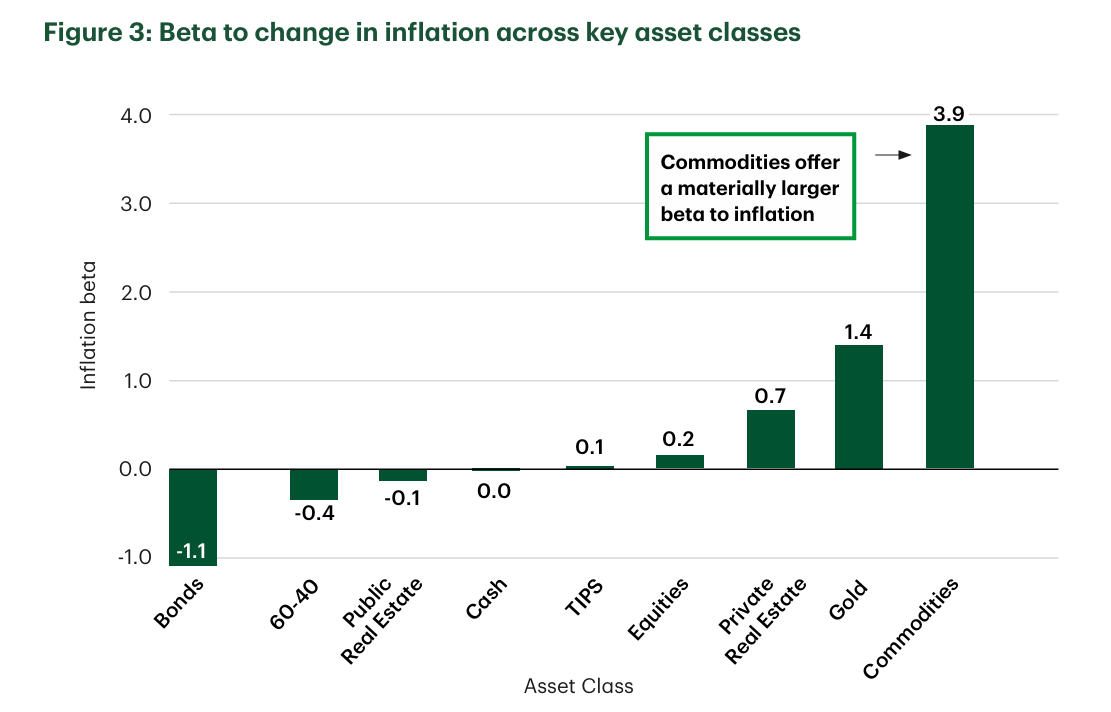
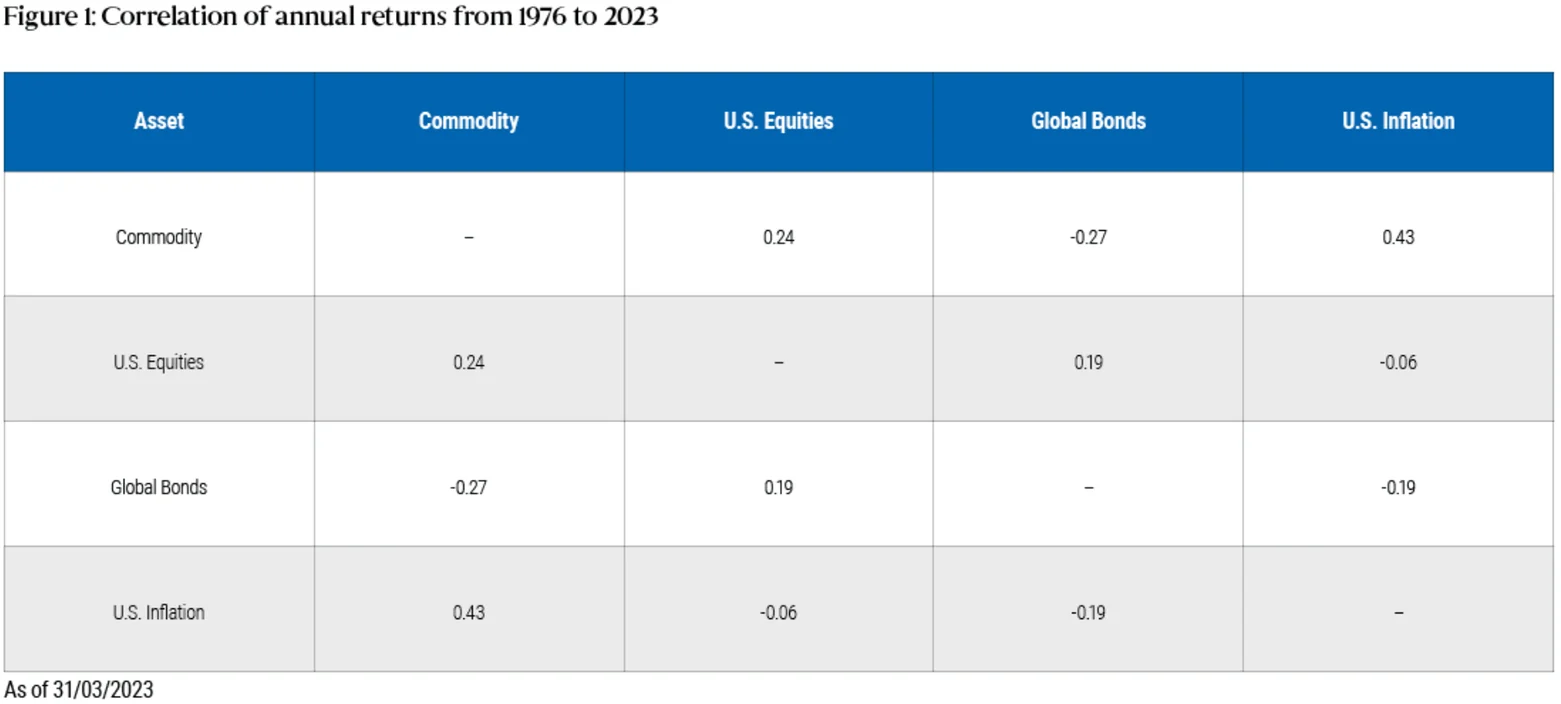
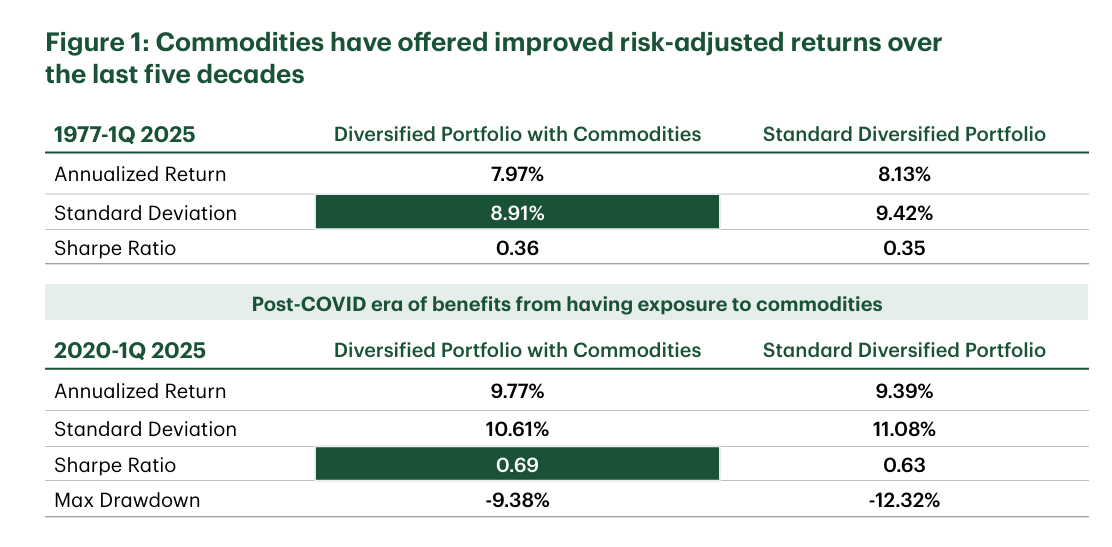
In sum, commodities as a whole can provide the largest beta to inflation, low diversification to traditional assets, and higher risk-adjusted returns.
Regarding inflation, the chart below shows that commodities tend to rise the highest in response to an increase in the inflation rate:
Beta of Inflation to Multiple Asset Classes
Source: TD Asset Management
Similarly, the chart below shows that commodities have low correlation to asset classes like US equities and global bonds:
Correlation of Annual Returns Among Various Asset Classes
Source: Resonanz Capital
Finally, diversifying a portfolio with commodities has provided higher risk-adjusted returns over the period between 1977 and Q1 2025 and the post-COVID-19 period, as the chart below shows.
Source: TD Asset Management
Growing interest in private markets
The low-yield environment that followed both the 200809 financial crisis and the COVID-19 lockdowns led institutional investors to a search for the best investment returns.
This search has unearthed the investment benefits of private assets. (Even financial advisers are advising retail investors to start investing in private assets.)
At the beginning of the year, we noticed the rising interest in alternative private assets like productive finance, growth equity, private equity and alternative credit investments like structured credit.
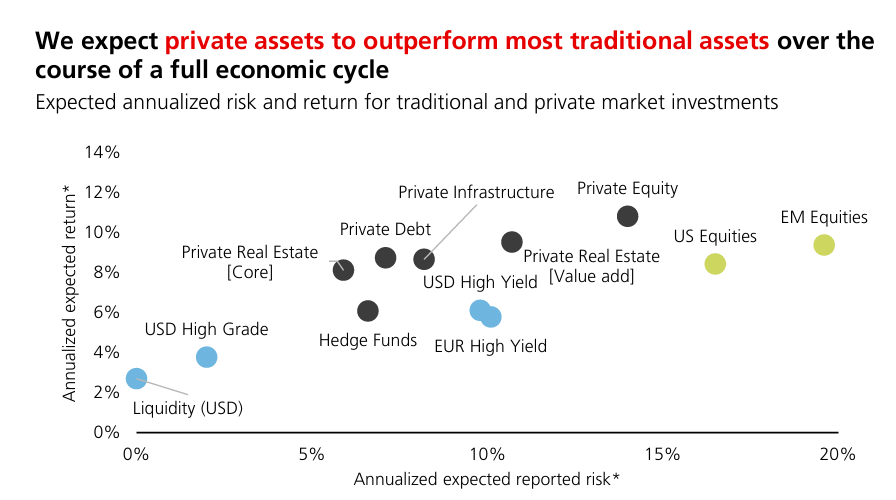
We pointed to this chart, which shows that these types of investments tend to outperform traditional assets over an economic cycle.
Expected annualised risk and return for traditional and private market investments
Source: UBS Asset Management
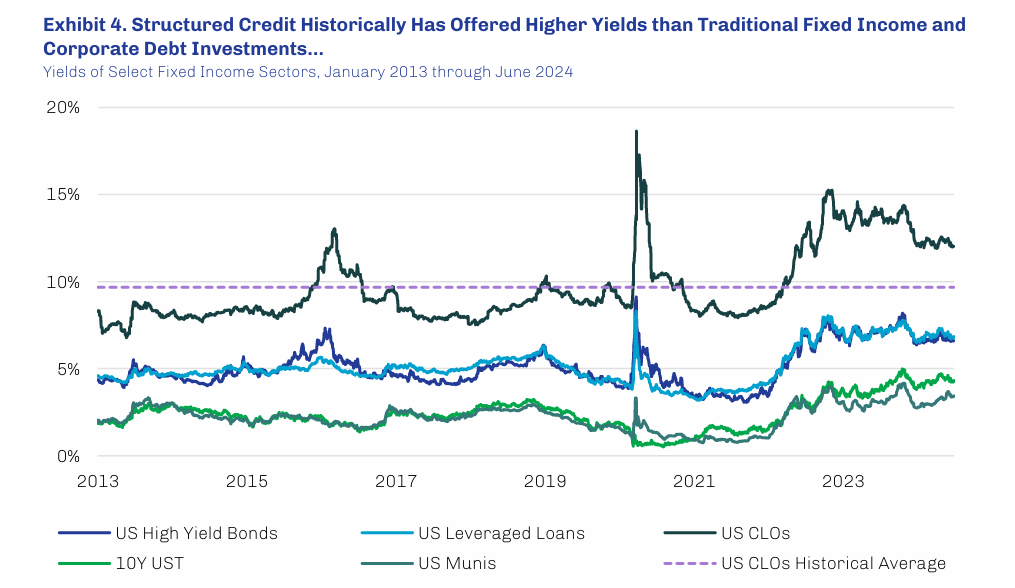
For structured credit, we noticed that they usually prove resilient when traditional fixed-income securities struggle, as this chart below shows:
The Yields of Structured Credit Vs Traditional Fixed-Income and Corporate Debt Investments
Source: First Eagle Investments
Investment management firms continue to affirm these two trends.
“Industry’s most respected data providers reaffirm private equity's long-term outperformance,” noted Moonfare, a digital investment platform, in August.
What about structured credit?
“Despite the almost continuous spread tightening trend we’ve seen since Q4 2022, structured credit still provides investors with a pick up in spread and yield when compared to corporate credit for any given level of risk,” according to Federated Hermes, an asset management company.
In sum, whether they are motivated by the search for a safe haven, an inflation hedge, or alpha, institutional investors cannot ignore the important portfolio roles of alternatives.
2. The stock market wins in the long run
When Liberation Day (April 2) led to a massive drop in the global equities market, many worried whether it was time to dump equities. As the chart below shows, $10 trillion was wiped out of the stock market between April 3 and 7:
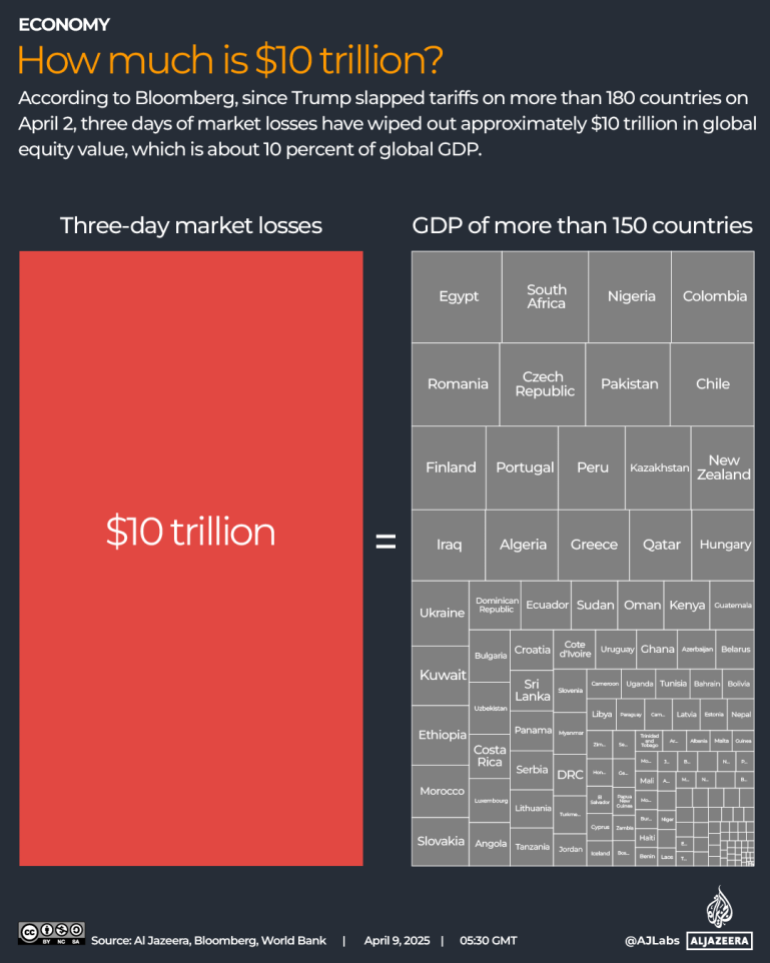
Source: Al Jazeera
Interestingly, by April 21, the S&P 500 Index entered into an uptrend that has continued till today. As said above, we are now at 16.45% YTD.
There was another temporary slip when Trump announced fresh tariffs on China in November, but the stock market has steadied and remains on its upward trajectory.
At the time of writing, the S&P 500 Index, NASDAQ Composite Index, and Dow Jones Industrial Average are within 1%, 3%, and 2% of a record high, according to Yahoo Finance.
This reinforces a truism that analysts and financial advisers have emphasised: despite short-term volatility, buying stocks is an engine of wealth over a longer timeframe.
While the increased allocations to alternatives are understandable, they should not take away from the importance of shares for long-term investment.
Also, as we mentioned in April, short-term volatility should be seen as an opportunity to buy quality companies at a discount.
“The best chance to deploy capital is when things are going down,” according to Warren Buffett.
3. It is imperative to diversify outside of the US
Many events that have happened this year have reiterated the need for global investors to avoid overexposure to the US economy.
When there was a sell-off in the US Treasuries market in April, many investors wondered if government bonds were still a good asset.
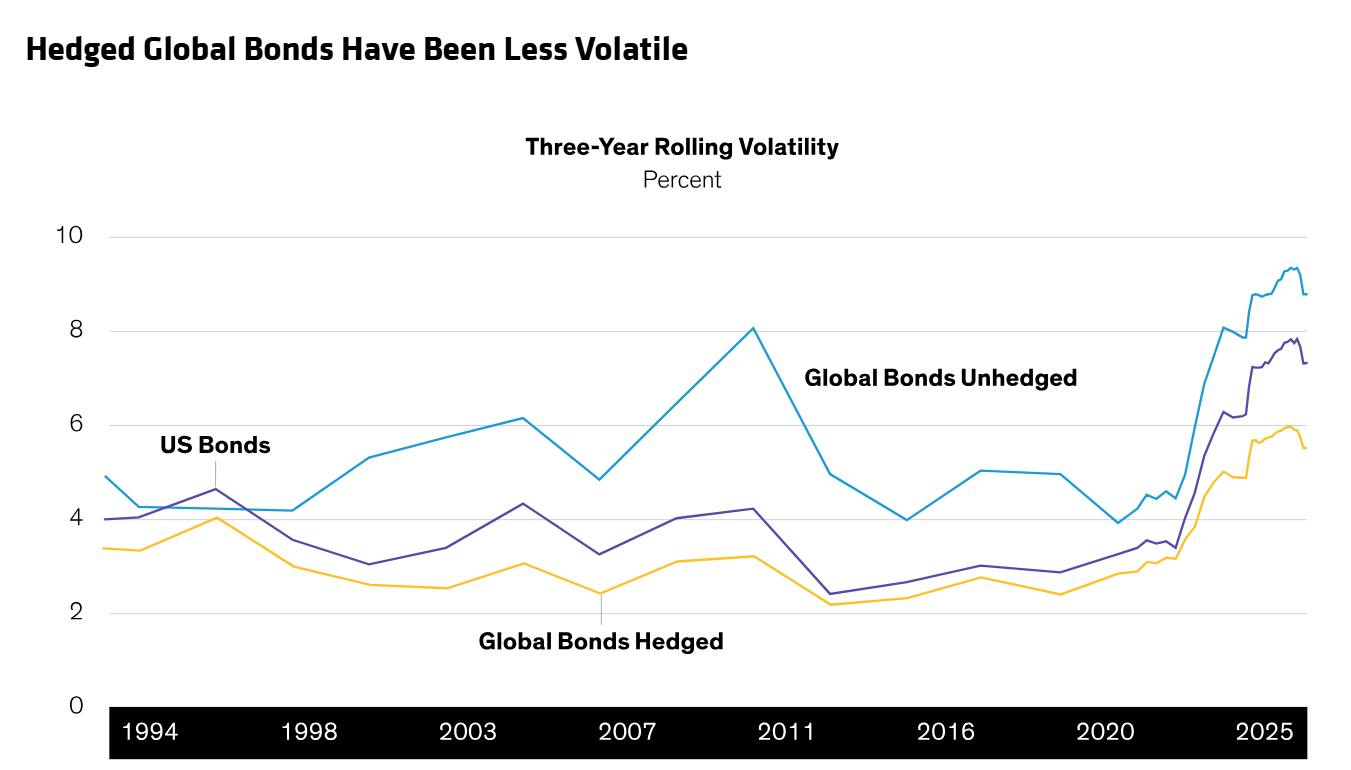
We saw that hedged global bonds (measured by the Bloomberg Global Aggregate Index USD Hedged) have been less volatile than US bonds over the past 30 years, according to a study by Alliance Bernstein:
Volatility of Hedged Global Bonds vs Unhedged Global Bonds vs US Bonds, 1994-2025
Source: Alliance Bernstein
What about the equities market?
We also noted in October that institutional investors pursuing resilient portfolios (just as economies pursue macroeconomic resilience) need to diversify by adding non-US equities.
This suggestion was due to several factors: concentration of the S&P 500 in tech stocks, valuation shifts, volatility patterns, and long-term return potential in ex-US markets.
In that regard, we considered how corporate reforms, strong earnings, and attractive valuations were driving interest in Japanese stocks even as risks like yen volatility, BoJ policy shifts, and global trade tensions remained.
Similarly, we reviewed how high corporate earnings, a stock market correlated with the broader economy, strong growth, growing local participation, depth, liquidity, and diversification were putting India on the map of global investors. We also mentioned risk factors like expensive valuations, competition from other Asian markets like Hong Kong and South Korea, foreign investor outflows, exchange rate fluctuations, and unresolved trade tensions with the U.S.
But how did this suggestion of investing outside the US turn out?
“International stocks have staged a powerful comeback in the past year, outpacing US markets by a wide margin in 2025,” said Fidelity Investments in November. “Even after that outperformance, non-US stocks generally trade at significant discounts to their US counterparts.”
They also noted that their portfolio managers have found good opportunities in Europe’s growing infrastructure and defence spending and Japan’s corporate restructuring efforts.
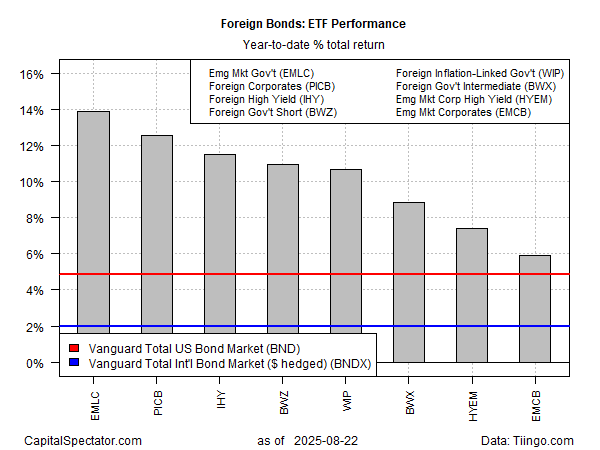
In August, Investing.com also noted how foreign bonds were outperforming US bonds, due primarily to a weak dollar.
Foreign Bonds Outperforming US Bonds
Source: Investing.com
4. There is a tight link between fiscal and monetary policy uncertainty
One of the investment lessons from Trump’s tariff is that fiscal and monetary policy uncertainty are connected.
The Federal Reserve had to hold interest rates longer than many analysts expected due to their fears about the impact of the tariff policy on inflation and economic growth.
It even got to a point where Jerome Powell warned of the risk of stagflation if Trump went ahead with his policies.
Even after finally cutting rates in September and November, there was still uncertainty in some corners about the appropriateness of another cut, given that inflation in the US was not yet at the 2% target.
The European Central Bank also faced a similar dilemma as inflation worries limited monetary easing. Even after cutting rates in February, the Bank of England has decided to hold them steady at 4%. The Bank of Japan has also held rates steady for most of 2025.
As we said in October, monetary policy uncertainty means that institutional investors should have strategies with which they can explore a falling or rising interest rate environment.
5. AI investment still requires caution
AI has been the dominant theme in 2025. Successful investors and entrepreneurs are talking about it nonstop.
When discussing growth equity trends in January, we noted how AI was the leading destination of venture capital funds in the US and Europe.
Also, a look at hedge fund trends showed that many of them are using AI to improve their operations and generate alpha for investors. Similarly, we saw that the application of AI was one of the key asset management industry trends in 2025.
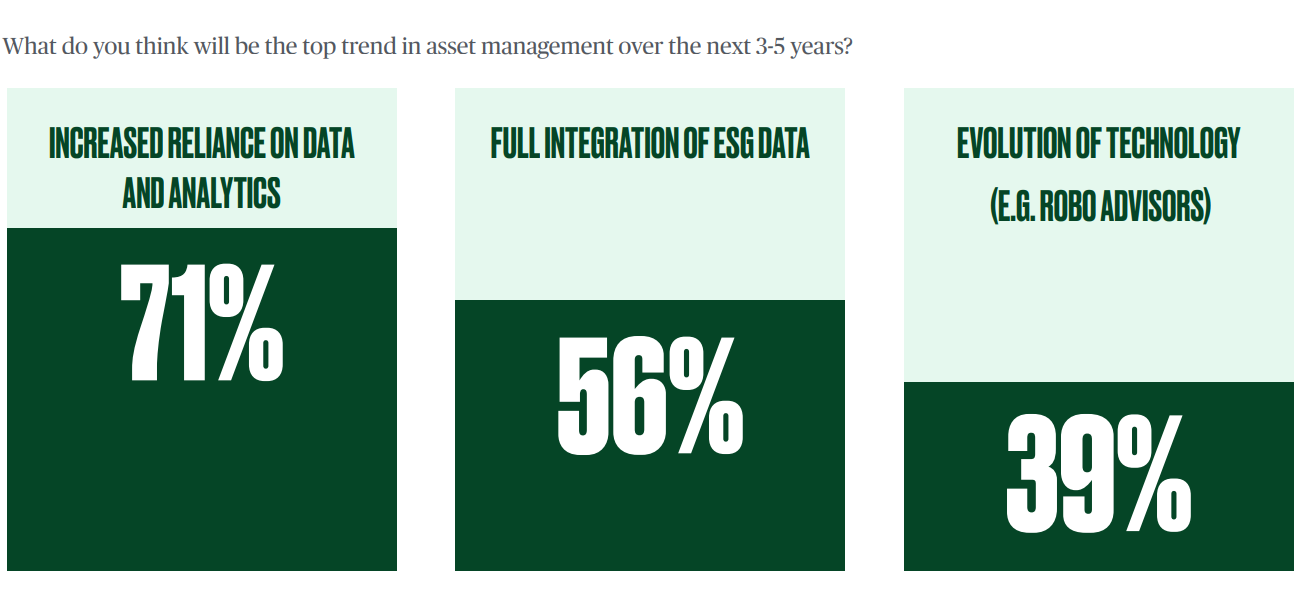
For example, the chart below shows that 71% of asset managers expect greater reliance on data and analytics.
Asset Management Trends Survey
Source: BNY Mellon
Yet, many investors have raised concerns about an AI bubble in relation to investment and usage.
Regarding investment, we noticed that many have raised concerns about the overvaluation of AI companies despite their inability to generate revenue or profit. It seems many companies are pouring money into AI just because it’s trendy.
Also, a recent study by McKinsey and Co. showed that most companies using AI have not reported a significant impact on enterprise-wide Earnings Before Interest and Taxes (EBIT).
Nevertheless, there are reasons to be optimistic about AI.
Regarding investment, Big Tech companies, with their stability and profitability, have been at the forefront of AI investment, dousing the concern that this might be a repetition of the dot-com bubble (where it was mostly IPOs).
Also, the technology sector is currently trading at a valuation premium compared to the late 90s and early 2000s, and the macroeconomic situation today is more expansionary (it was mainly contractionary in the dot-com era).
Furthermore, many AI enthusiasts believe that current CAPEX spending will result in future technological progress and productivity gains that will have a real-world impact.
The investment guidelines in November regarding AI investment are still valid:
- Focus on fundamentals: When there is a frenzy, good companies will be muddled up with mere fads. Learn to focus on companies with strong fundamentals (revenue, profit, product-market fit) that can withstand a bubble burst.
- Diversify your holdings: Try and navigate the return-risk dynamics between hyperscalers (high returns, high risk) and early-stage startups (higher potential returns, higher risk). It might be safer to stay in between: AI companies building specialised solutions in growing industries (finance, industrials, healthcare, etc.).
- Long-term focus: You should approach AI as a multi-decade technology rather than a short-term fad to flip some dollars. This will help you focus on companies that can deliver value over long periods.
6. ESG investment is still thriving despite concerns
In March, we highlighted uncertainties around ESG as one of the trends in the hedge fund market.
Though hedge funds had become more amenable to ESG investing (despite initial misgivings about its impact on returns), there were doubts about how long they were willing to go.
Hedge funds in Europe were pushing against new strenuous requirements, and others across the globe were concerned about the complexity of ESG requirements, the inconsistency of ESG ratings, and whether ESG had any tangible benefits.
However, some analysts believed the waning of interest was temporary, given fundamentals like consumer demand for sustainability, global interest in green technologies, and the pursuit of global standards.
Interestingly, the fundamentals we pointed to in March have remained rock solid, as institutional investors continue to embrace ESG.
“Sustainability remains one of the top priorities for institutional investors,” according to BNP Paribas, a global financial services firm. “Despite the challenges posed by market volatility and shifting regulatory requirements, investors are committed to integrating ESG considerations into their investment strategies.”
Some of the investing tips they highlighted in relation to ESG include:
- Approach sustainability as a risk management tool that can provide resilience in volatile markets.
- Adopt a wide range of strategies, including negative screening, best-in-class investing, active ownership, and impact investing.
- See ESG as crucial to the achievement of long-term financial goals.
- Tailor investment portfolios to specific risk profiles and sustainability goals.
- Move from broad principles to targeted themes.
- Prioritise complete, consistent, and standardised data
7. We need to rethink the role of cryptocurrencies
Investing in bitcoin has long divided opinions among traditional finance experts.
However, some of the disagreements result from an inability to see how the asset itself has been changing.
For example, many may point to the growing correlation between bitcoin and the stock market to dispute its role as a portfolio diversifier.
Yet, many analysts are recognising that bitcoin’s role is more of a return amplifier rather than a risk reducer. Different studies have shown that it provides higher risk-adjusted returns than stocks and gold.
For example, the chart below shows that bitcoin’s average Sharpe ratio is higher than that of US equities, real estate, and gold.
Bitcoin’s Sharpe Ratio vs Other Assets

Source: Ark Invest
Also, some will point to its high volatility even when recent studies show that bitcoin’s volatility is reducing with age, and some of the wide swings we saw in its early days won’t repeat themselves. Even if we consider its volatility to be a risk factor, we have seen that it still boasts higher risk-adjusted returns than other assets.
Finally, though bitcoin’s case as a payment method is weak, that has not eviscerated demand for the asset.
It’s no news that demand in the cryptocurrency world does not depend entirely on utility. Factors like favourable regulations, traditional finance (Trad Fi) adoption (acceptance of bitcoin, ethereum, and solana ETFs, for example), strong communities, and positive market sentiment can cause price surges at any time.
More importantly, one of the key investment lessons of 2025 is that cryptocurrency is bigger than bitcoin.
In July, we emphasised how Trad Fi companies have been tokenizing real-world assets (RWA) to improve the liquidity of these assets and offer them in a different (and growing) market.
Institutional investors can embrace tokenized RWA for their liquidity, transparency (backed by smart contracts), security, and efficiency (lower transaction costs and processing time).
Finally, we noted in September that institutional investors have been using stablecoins to navigate cross-border investment. Fund managers who are crypto-enthusiasts have also used them to invest in various crypto assets.
8. Disciplined risk management will always be crucial
The final investment lesson we learned in 2025 is that disciplined risk management will always be crucial.
In fact, all the different investments we have considered require sound risk management.
Do you want to invest in private assets? You need to manage illiquidity risk. With structured credit, you need to conduct due diligence to ensure the underlying loans are credible.
When diversifying outside of the US, you need to be aware of the political, economic, interest rate, and currency risks associated with the individual countries and regions where you are investing.
As we have seen, even AI and ESG investing requires sound risk management.
And what about cryptocurrencies? Well, that goes without saying.
With the cio investment club, you will join a network of asset managers and other financial markets experts who can serve as a sounding board for your investment ideas.
This can help you identify both risk factors and opportunities you have overlooked and bring clarity to your asset allocation decisions.
We also organise exclusive roundtables and investment breakfasts where you can physically network with investment professionals from every part of the world.
Do you want to be part of an investment community that will help you make more profitable investment decisions? Register today to become a part of the cio investment club.
Takeaways
- Commodities, private markets, and structured credit continue to prove their value as hedges, diversifiers, and long-term return drivers.
- Diversification beyond the U.S. is no longer optional as the outperformance of international equities and bonds in 2025 highlights the benefits of global exposure.
- Though AI and ESG remain powerful, investors must stay grounded in fundamentals, long-term thinking, and disciplined risk filters.
- Risk management (due diligence, investment analysis, scenario planning, and diversification, etc.) remains the ultimate advantage for institutional investors.
This document is produced by Instaconnect Limited, trading as cio investment club, a company registered in England & Wales with registration number 15262951.
Instaconnect Limited is neither authorised nor regulated by the Financial Conduct Authority in the United Kingdom nor the Securities and Exchange Commission in the United States of America.
This document is a marketing documentation and is not intended to constitute an invitation or an inducement to engage in any investment activity. It is not intended to constitute investment advice and should not be relied upon as such. It is not intended and none of Instaconnect Limited, its holding companies or any of its or their associates, or any of the participants in the documentation, shall have any liability whatsoever for (a) investment advice; (b) a recommendation to enter into any transaction or strategy; (c) advice that a transaction or strategy is suitable or appropriate; (d) the primary basis for any investment decision; (e) a representation, warranty, guarantee with respect to the legal, accounting, tax or other implications of any transaction or strategy; or (f) to cause Instaconnect Limited to be an advisor or fiduciary of any recipient of this report or other third party.
The content and graphical illustrations contained in this document are provided for information purposes and should not be relied upon to form any investment decisions or to predict future performance. Instaconnect Limited recommends that recipients seek appropriate professional advice before making any investment decision. Although the information expressed is provided in good faith, Instaconnect Limited does not represent, warrant or guarantee that such information is accurate, complete or appropriate for your purposes and none of them shall be responsible for or have any liability to you for losses or damages (whether consequential, incidental or otherwise) arising in any way for errors or omissions in, or the use of or reliance upon the information contained in this document.
To the greatest extent permitted by law, we exclude all conditions and warranties that might otherwise be implied by law with respect to the document, whether by operation of law, statute or otherwise, including as to their accuracy, completeness, or fitness for purpose.
Instaconnect Limited and its logo are proprietary trademarks of Instaconnect Limited and are registered in the United Kingdom. Unauthorised copying of this document is prohibited.
© Copyright Instaconnect Limited 2025